




NAI Vietnam | 24 April 2026
A New Milestone in Vietnam’s Administrative Reform
Vietnam has officially designated Dong Nai as the country’s seventh centrally governed city after the National Assembly approved the resolution on 24 April 2026, with the new administrative status taking effect on 30 April 2026. The move places Dong Nai alongside Hanoi, Ho Chi Minh City, Hai Phong, Da Nang, Hue and Can Tho as one of Vietnam’s centrally governed municipalities.
The newly established city spans approximately 12,737 square kilometers and is home to more than 4.4 million residents, making it one of the country’s largest metropolitan jurisdictions by both area and population. The designation represents one of the most significant milestones in Vietnam’s ongoing administrative restructuring and reflects the government’s long-term vision to strengthen key regional growth centers.
Positioned as Southern Vietnam’s Next Growth Engine
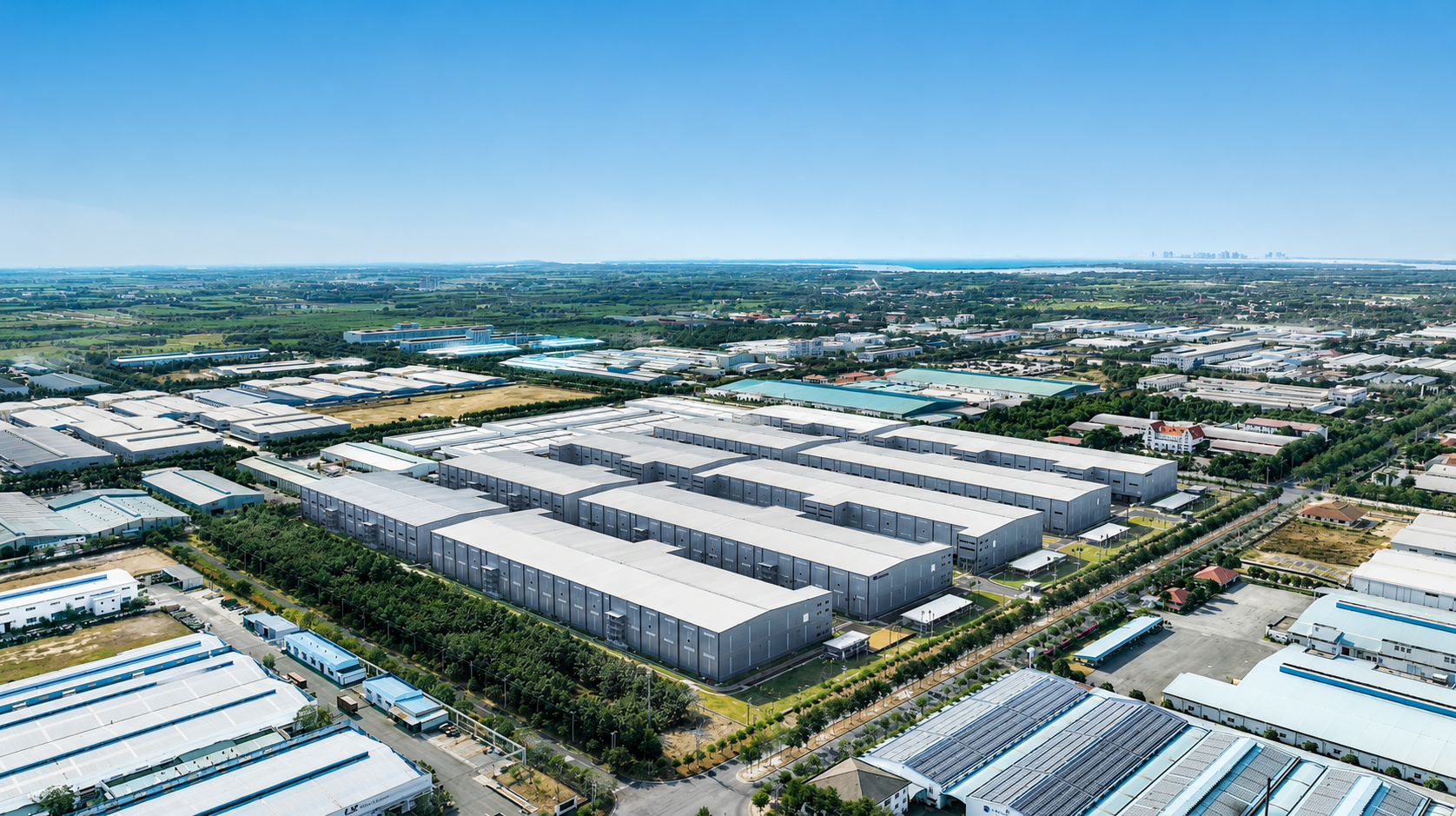
Dong Nai’s elevation comes as the city enters a transformative phase of infrastructure and industrial development. Anchored by the construction of Long Thanh International Airport, one of Southeast Asia’s largest aviation projects, Dong Nai has also developed one of Vietnam’s most extensive industrial ecosystems, supported by expanding expressway networks and strategic connectivity to Ho Chi Minh City and the Cai Mep–Thi Vai port complex.

According to the government’s development strategy, the city is expected to play an increasingly important role in advanced manufacturing, logistics, aviation services and high-value industries, complementing Ho Chi Minh City’s position as the country’s financial and commercial center.
More Centrally Governed Cities Could Follow
Dong Nai is unlikely to be the final addition to Vietnam’s network of centrally governed cities. As part of the country’s long-term urban development strategy, several localities have been identified as potential candidates for future upgrades.
Among them, Quang Ninh has emerged as the strongest contender following recent policy direction supporting its transition to centrally governed city status. Meanwhile, Bac Ninh and Khanh Hoa remain part of Vietnam’s national urban planning roadmap, with long-term ambitions to join the country’s highest administrative tier.
While no official timeline has been confirmed for all proposed cities, the continued expansion of Vietnam’s metropolitan network reflects the government’s broader effort to build multiple regional growth centers capable of supporting the country’s next phase of economic development.
Setting the Stage for Vietnam’s Next Chapter
The establishment of Dong Nai as a centrally governed city represents more than an administrative milestone. It marks another step in Vietnam’s evolving urban development strategy, where major cities are expected to assume increasingly specialized economic roles supported by world-class infrastructure and stronger regional connectivity.
As additional metropolitan centers emerge across the country, businesses and investors will be closely watching how these structural changes influence investment, industrial development and commercial real estate opportunities throughout Vietnam.