


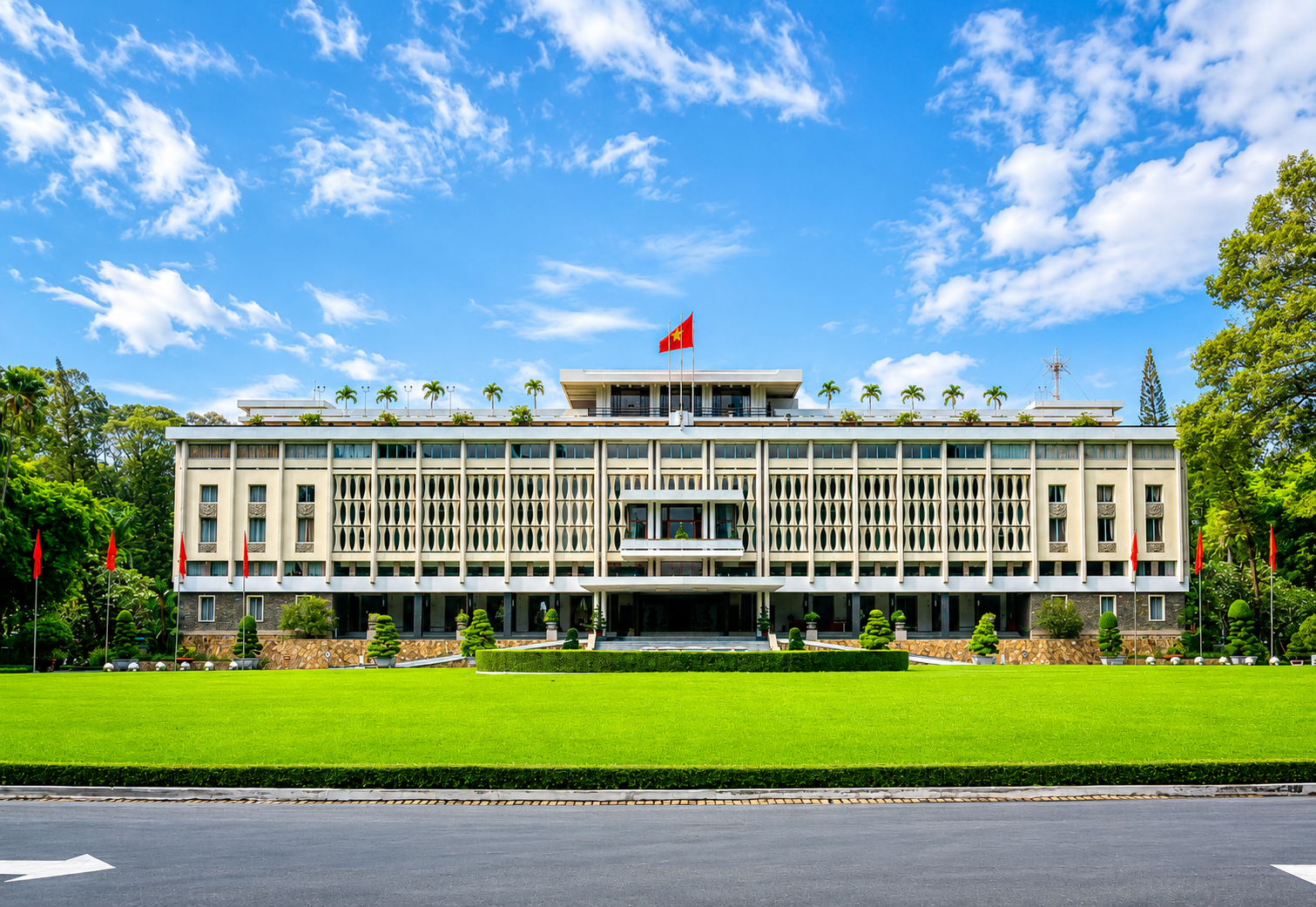


How Dong Nai’s rise as Vietnam’s seventh centrally governed city signals a shift from standalone industrial parks toward integrated metropolitan ecosystems.
NAI Vietnam · Research Team · 2025 Series · 6 min read
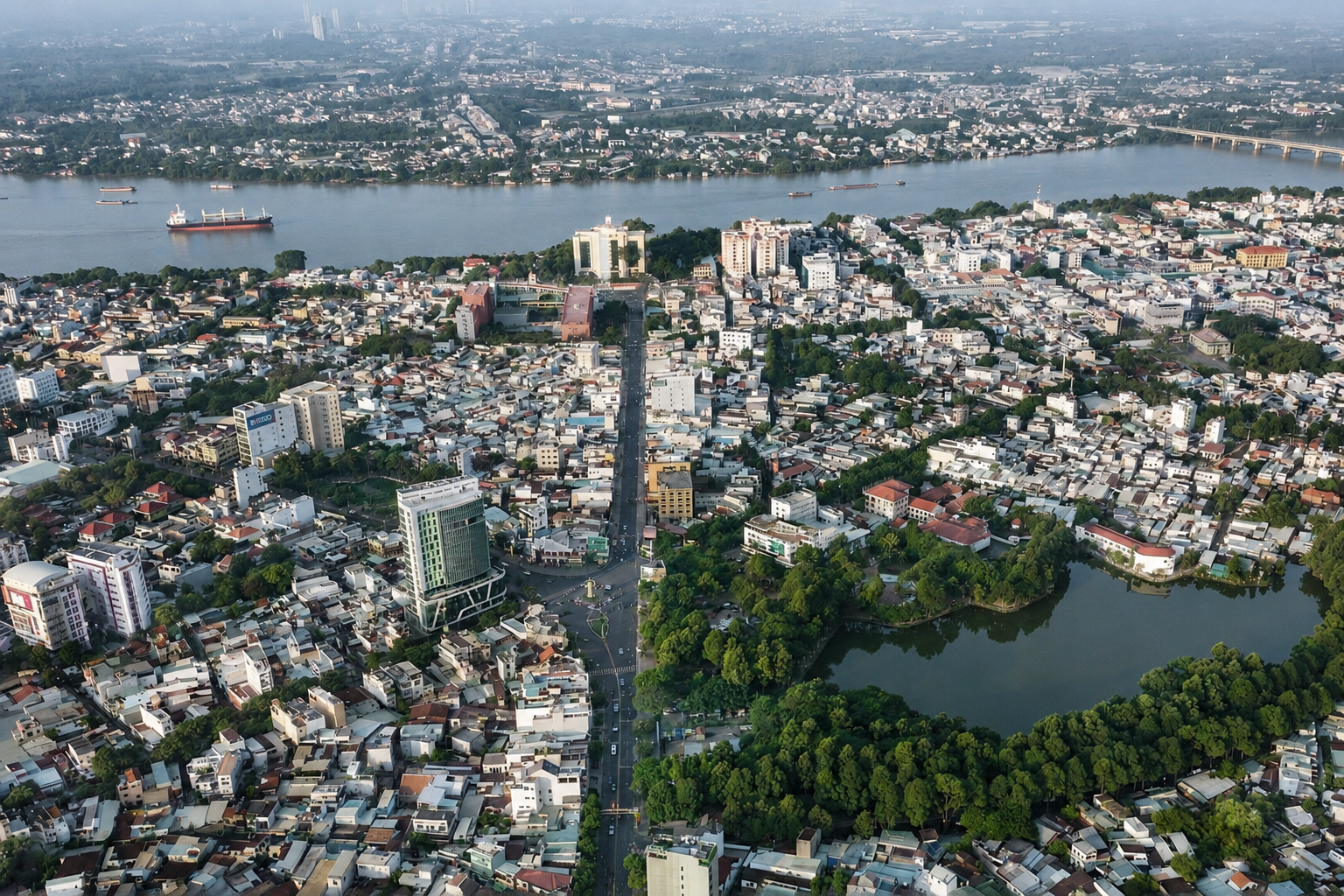
The establishment of Dong Nai as Vietnam’s seventh centrally governed city reflects a broader shift in the country’s development strategy. Rather than relying primarily on Hanoi and Ho Chi Minh City to drive economic growth, Vietnam is gradually building a network of metropolitan centers that can support industrial expansion, infrastructure investment and regional competitiveness.
The timing is notable. Vietnam continues to strengthen its position as one of Asia’s leading manufacturing destinations, attracting US$38.42 billion in registered FDI in 2025, while disbursed FDI reached a record US$27.62 billion, the highest level in the past five years. Manufacturing and processing remained the largest recipient of foreign investment, reinforcing Vietnam’s role in global supply chains.
Rather than creating additional administrative centers, the government’s strategy appears to focus on developing multiple economic engines capable of supporting higher-value industries, advanced manufacturing and long-term investment across different regions of the country.
Industrial Development Is Becoming More Ecosystem Driven
Vietnam’s industrial success has traditionally been built around industrial parks. As of November 2025, the country has established 478 industrial parks nationwide, according to the Ministry of Planning and Investment, of which 324 are currently operational and 153 are under construction, forming one of the largest industrial real estate networks in Southeast Asia. As global manufacturers continue to diversify their supply chains, competition is shifting beyond individual industrial parks toward integrated metropolitan ecosystems that combine infrastructure, logistics, skilled labor and supporting industries.
This trend is already visible in several emerging growth centers. Dong Nai leads the country with 59 established industrial parks (81 under master planning), while Bac Ninh has established itself as Vietnam’s electronics manufacturing hub, Hai Phong continues to strengthen its maritime and logistics economy, and Quang Ninh is expanding its role in cross-border trade and deep-water port development. Rather than competing for the same industries, these cities are increasingly developing around distinct economic strengths that complement Vietnam’s broader industrial strategy.
How Vietnam Compares Across Southeast Asia
Vietnam’s industrial growth does not happen in isolation. The country competes directly with Thailand and Indonesia for manufacturing FDI, and while Vietnam’s industrial park system is frequently cited as best-in-class in governance, real wages have risen at a 5 percent annual average rate since 2006, more than double the pace of its ASEAN peers, gradually narrowing the cost advantage that originally drew manufacturers to the country. This is part of why infrastructure and ecosystem depth, not labor cost alone, are becoming the more durable differentiators.
Infrastructure Is Becoming the New Competitive Advantage
The next phase of industrial development will depend less on land availability and more on infrastructure connectivity. This is where the emergence of centrally governed cities becomes particularly significant.
Dong Nai provides a clear example. Beyond hosting Vietnam’s largest concentration of industrial parks, the city is also home to Long Thanh International Airport, one of the country’s most ambitious infrastructure projects. Once fully completed, the airport is designed to handle 100 million passengers and 5 million tonnes of cargo annually, creating a major aviation and logistics gateway for Southern Vietnam.
Similar competitive advantages are emerging elsewhere. Hai Phong continues to expand its deep-water port system, Bac Ninh benefits from its proximity to Hanoi and an established electronics supply chain, while Quang Ninh connects northern Vietnam with China through border trade and maritime logistics. These infrastructure assets are likely to shape future investment decisions as much as industrial land availability.
What This Means for Industrial Occupiers
For occupiers, the criteria for selecting industrial locations are becoming increasingly sophisticated. Rental costs remain important, but they are no longer the only deciding factor. Manufacturers are placing greater emphasis on access to ports, airports, multimodal transport, suppliers, skilled labor and supporting business services.
This evolution is also reflected in recent investment trends. In the first quarter of 2026 alone, Dong Nai attracted nearly US$1.4 billion in domestic and foreign investment, including approximately US$803 million invested in industrial parks. Much of this capital was directed toward high-tech manufacturing, electronics and supporting industries, highlighting a continued shift toward higher-value industrial production.
Total US$1.4B
For companies evaluating Vietnam, the conversation is gradually shifting from selecting an individual industrial park to identifying the metropolitan ecosystem that can best support long-term operational efficiency and supply chain resilience.
NAI Vietnam’s Perspective
The rise of centrally governed cities represents more than an administrative reform. It reflects Vietnam’s ambition to create multiple regional growth engines capable of supporting the country’s next stage of industrialization and economic development.
For commercial real estate, this evolution is expected to reshape how industrial markets compete. Future demand is likely to be driven less by standalone industrial parks and more by integrated ecosystems where manufacturing, logistics, infrastructure and business services operate together. As Vietnam continues to attract high-quality foreign investment, understanding the strengths of each metropolitan region will become increasingly important for occupiers, developers and investors making long-term location decisions.
Source
- FDI figures (registered and disbursed, 2025): Ministry of Planning and Investment of Vietnam.
- National industrial park count (November 2025): Ministry of Planning and Investment of Vietnam.
- Dong Nai industrial park figures (post-consolidation): Vietdata Research.
- Wage growth comparison: OECD Economic Surveys, Vietnam 2025.
- Dong Nai Q1/2026 investment figures: provincial investment data.
This article is for informational purposes only and does not constitute investment advice. Readers should verify figures against official government and statistical releases before use in investment decisions.